


Jan 18, 2026
The results of the European Car of the Year 2026 competition have not been limited to a simple ranking of new models, but have become a true snapshot of the state of the European automotive industry on the threshold of 2025–2026.

The victory of the Mercedes-Benz CLA , as well as the composition of the finalists and the distribution of positions, reflect profound processes that the sector is going through: the transformation of model ranges, the pressure of electrification, the change in consumer expectations and the search for sustainable business models in a prolonged period of transition.
How is the European Car of the Year decided?
The European Car of the Year (COTY) award has been presented since 1964 and is considered one of the most prestigious distinctions in the global automotive industry. The winner is chosen by an independent jury of 59 specialist journalists from 23 European countries . Each jury member has a fixed number of points to distribute among the finalists.
The evaluation is based on a set of criteria that includes technological innovation, safety, environmental sustainability, design, practicality, suitability to market expectations and value for money.
Only new models launched in the European market during the year and available in several countries are eligible to participate. After a shortlist is drawn up, a final vote is held to determine the final ranking.
Competition results: winner and finalists

Mercedes-Benz CLA — Car of the Year 2026
The winner of the competition was the third-generation Mercedes-Benz CLA . The jury highlighted the model's technical versatility as a key factor in its success. The CLA is built on a new architecture that accommodates various powertrain options: from internal combustion engines and hybrid versions to a fully electric variant.
The model combines improved aerodynamics, an expanded suite of driver assistance systems, and a clear focus on energy efficiency. Experts emphasized that the CLA has become a rare example of a premium car that doesn't rely on a single future scenario, but rather adapts to the inherent uncertainty of this era of transition.

Škoda Elroq — the rational electric crossover
Second place went to the Škoda Elroq , a compact electric SUV based on the MEB platform. The model received very positive reviews for its practicality, spacious interior, and focus on the everyday needs of families. The Elroq has become a symbol of the gradual transformation of the electric car, which is moving from a niche product to a mass-market mode of transportation.

Kia EV4 — a commitment to design and a new generation
Third place went to the Kia EV4 , a fully electric model with a distinctly futuristic design. The jury highlighted its bold visual language, its digital architecture, and its focus on a young audience for whom the car is part of a digital ecosystem and not just a means of transportation.
Other finalists for Car of the Year 2026
The final list also included:
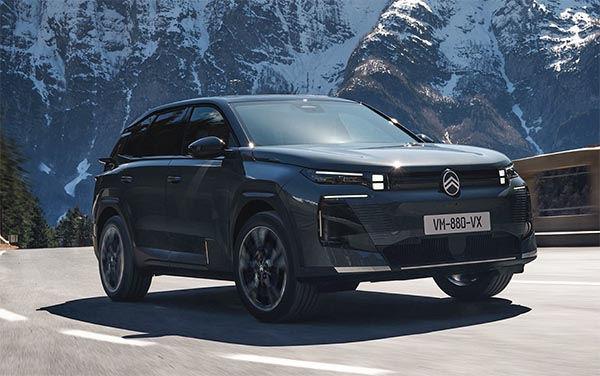
Citroën C5 Aircross — crossover focused on comfort and smooth ride.
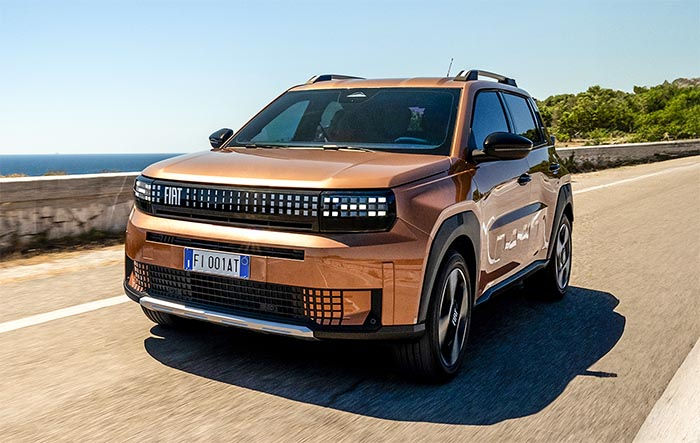
Fiat Grande Panda — a compact and affordable city car.

Dacia Bigster — Large and economical SUV, focused on maximum practicality.

Renault 4 E-Tech — an electric reinterpretation of an iconic model, with an emphasis on accessibility and nostalgia.
The composition of the finalists clearly reflects the market shift towards crossovers and electrified models , designed for a mass market.
The European automotive industry in 2025: between strategy and survival
The year 2025 became a period of reassessment for European manufacturers. After the strong optimism of the beginning of the decade, the sector faced a more complex reality: slowing growth in the electric vehicle market, rising production costs, pressure from Chinese manufacturers, and uneven infrastructure readiness.
Major automotive groups were forced to adjust their strategies. Mass electrification remained the official line, but the focus increasingly shifted towards hybrid solutions and multi-energy platforms, capable of reducing risks and preserving sales volumes.
The gradual abandonment of the "one engine type for all markets" approach was particularly significant. Manufacturers are increasingly focusing on regional strategies, flexible product ranges, and extending the life cycle of internal combustion engines in specific segments.
The victory of the Mercedes-Benz CLA fits perfectly into this logic: versatility has proven to be more valuable than a dogmatic adherence to the electric car.
At the same time, competition from Asia intensified. By 2025, European brands began to consider not only technological factors but also price parameters as a key element for survival, which was directly reflected in a greater focus on affordable models in the competition's final.
The Spanish automotive industry in 2025: production without its own brands, but with ambition
In 2025, Spain maintained its status as one of Europe's leading automotive manufacturing hubs, despite not having its own global brands. Plants belonging to various manufacturers continued to play a vital role in European supply chains.
The SEAT/Cupra group played a prominent role, completing its transformation from a mainstream brand to a manufacturer with a higher value-added positioning. In 2025, Cupra became one of the few European brands with sustained sales growth, driven in part by exports.
At the same time, the Spanish automotive industry felt the pressure of the transition to electric vehicles more intensely. Investments in battery factories and the modernization of plants were accompanied by uncertainty in demand and a heavy reliance on European support policies.
Spain reinforced its role as an industrial and logistics hub , rather than as a brand development center.
For the Spanish market, the results of the European Car of the Year 2026 are also revealing: the absence of national models among the finalists underlines that the country's current role is primarily industrial and infrastructural , and not brand-related.
Conclusion: the competition as a mirror of the market
The results of the European Car of the Year 2026 show that the European automotive industry has entered a phase of complex equilibrium . Electrification remains a strategic objective, but success lies not in the most radical approach, but in the most flexible and adaptable one.
The Mercedes-Benz CLA has become the symbol of this stage: an era in which success is not defined by the type of engine, but by the manufacturer's ability to offer diverse answers to the same question about the future .