


Sep 26, 2025
Torrevieja is a city in the province of Alicante with one of the fastest growing populations in Spain.
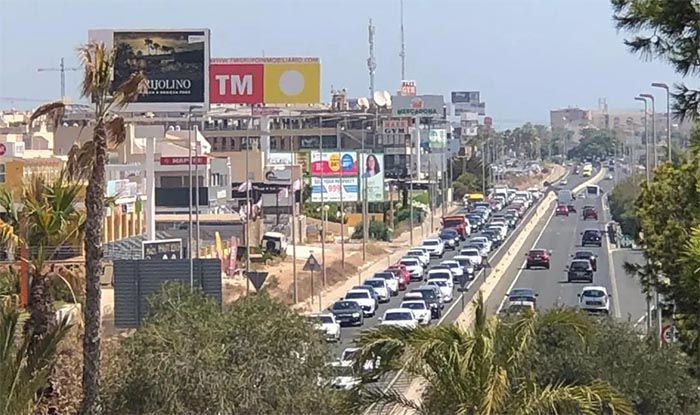
In recent years, the number of officially registered residents in Torrevieja has exceeded 110,000 inhabitants. However, this figure does not reflect the actual number of people who reside in and visit the city. The number of foreign homeowners who come once or twice a year, together with tourists attracted by its sandy beaches and mild Mediterranean climate, exceeds one million people a year.
To move comfortably around the city and its surroundings, such a large population needs public transport. Currently, most visitors hire cars due to the lack of convenient alternatives.
Both residents and tourists wonder how it is possible that Torrevieja, being a tourist destination, has been disconnected from an efficient rail network, leaving only daytime buses and taxis as options.
The railway: from boom to oblivion
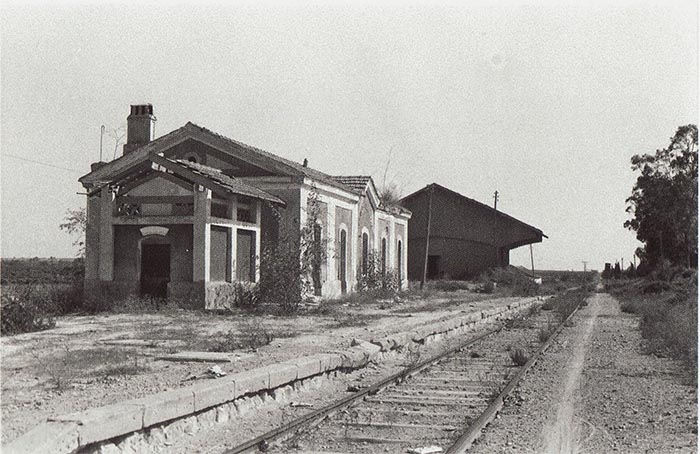
The railway connection with Torrevieja existed over a century ago.
In 1884 the Albatera–Torrevieja line was inaugurated, covering a distance of approximately 27 kilometres. It was of great strategic importance: it was used to transport salt and agricultural products, as well as providing passenger services.
In the mid-20th century, the era of the railway gave way to the rise of the motor car. With the growth of roads and car ownership, passenger numbers fell, and the line—which required investment—was considered unprofitable.
In 1966, several stations reduced their activity, the maximum speed was limited to 40 km/h, and on 12 January 1970, passenger service was officially cancelled along the entire line. From then on, the tracks were mainly used for salt transport, although at an increasingly reduced rate.
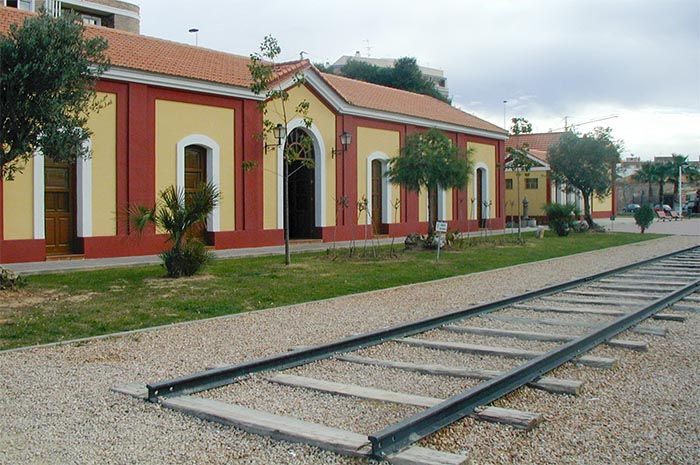
The final chapter came suddenly and dramatically: in October 1986 heavy rains caused landslides that damaged the track bed. The soft, waterlogged ground gave way, a sleeper sank and a freight train carrying salt derailed. This accident marked the end: after the accident, it was deemed unfeasible to continue operating the line, which was permanently closed.
In the 1990s, the tracks were dismantled, and part of the old route was handed over to local councils, becoming greenways and public spaces.
The station building was converted and now houses the Torrevieja Natural History Museum.
Sea transport
Although Torrevieja is a coastal town with a port area and a large fleet of boats and yachts, there are no regular ferry services connecting the town with other ports in the region.
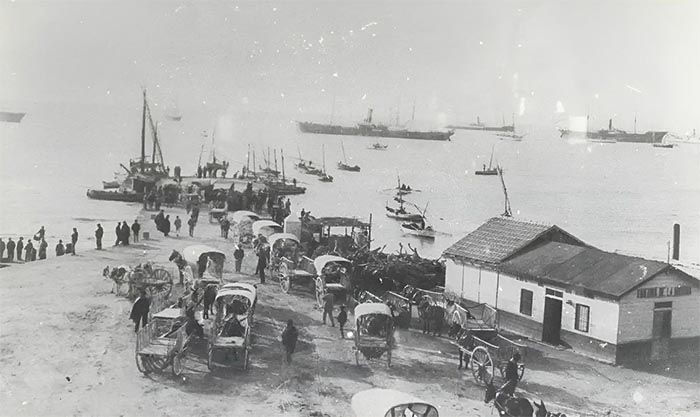
Historically, since the mid-19th century, the residents of Vega Baja aspired to have a port in Torrevieja Bay. The main motivation was to export salt from the lagoons, as well as agricultural products.
In the decade of 1870, the Muelle Mínguez quay was built, which until year 1950 was the only one in the city and was used for loading and unloading goods. This pier was buried underground during the construction of the new fishing port in the 1950s, although it is currently being restored as a site of cultural interest.
The new fishing and marina port was designed with a focus on tourism, fishing and recreational boating, rather than large-scale industrial or commercial activity.
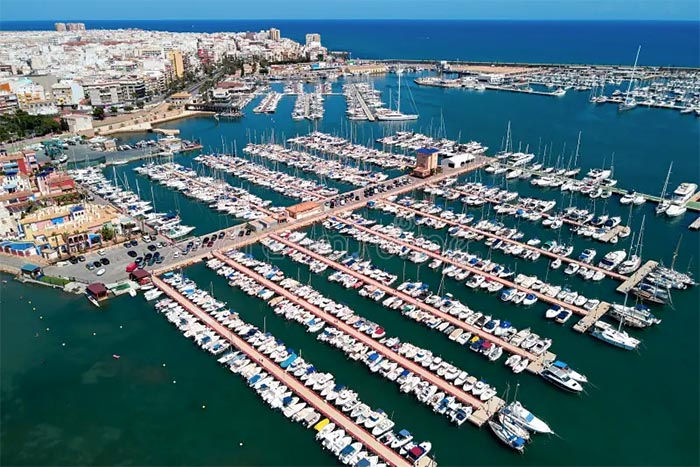
Today, maritime transport in Torrevieja focuses on tourist services: recreational catamarans, excursions and seasonal routes to the island of Tabarca.
The port is mainly used for private yachts, the fishing fleet and nautical tourism.
The City Council is promoting projects to modernise and improve the port area, although there are currently no plans to establish a regular ferry service with other cities.
The bus: the backbone of the transport network
Currently, the bus is the main means of public transport for residents and visitors to Torrevieja and Orihuela Costa.
ALSA— the main long-distance operator, connecting Torrevieja with Alicante, the airport, Madrid and other major cities.
BusBAMand other regional companies offer routes to Murcia and nearby towns.
Costa Azul and municipal operators provide service on urban and suburban routes, connecting neighbourhoods in Torrevieja with the residential areas of Orihuela Costa.
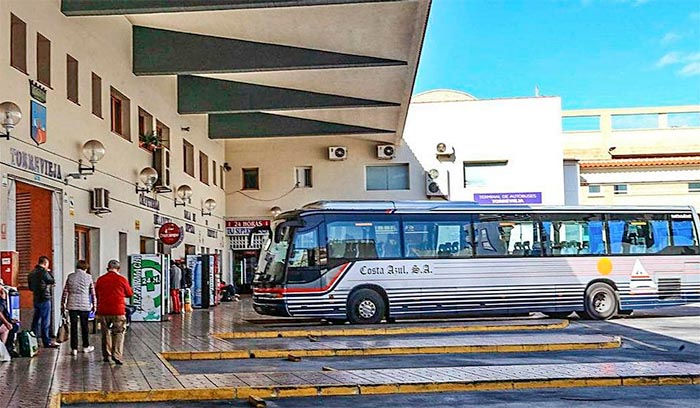
The main hub is the Torrevieja bus station, from where both intercity and international routes depart.
However, the lack of bus routes and buses in a city and region that is constantly growing generates complaints among residents and visitors, and fails to resolve traffic jams on the main access roads.
According to the latest data, the City Council is considering expanding bus routes, purchasing more vehicles, and improving routes.
Development prospects and projects
The idea of bringing the railway back to the coast has been under discussion for decades. Universities, local councils and business associations have proposed projects for new lines that could connect Torrevieja and Orihuela Costa with Alicante airport and the TRAM network. However, neither the financing nor the construction has been approved to date.
There remains hope that the advantages of sustainable and efficient rail transport will be recognised, and that the responsible authorities will take on this project for the future of the region.
Conclusion
The public transport network in Torrevieja and Orihuela Costa is currently based on buses. The urban and interurban network provides connections to the airport and neighbouring towns, but the lack of routes and frequency forces many residents to use their own cars, causing traffic jams and parking problems.
The historic railway is now a thing of the past, and new projects are still under consideration. Maritime transport plays a role in tourism, but it is not a regular means of transport.
In short, the region continues to depend on road transport, while the future development of a stable rail or maritime network will depend on political decisions and strategic investments.