


Jul 27, 2026
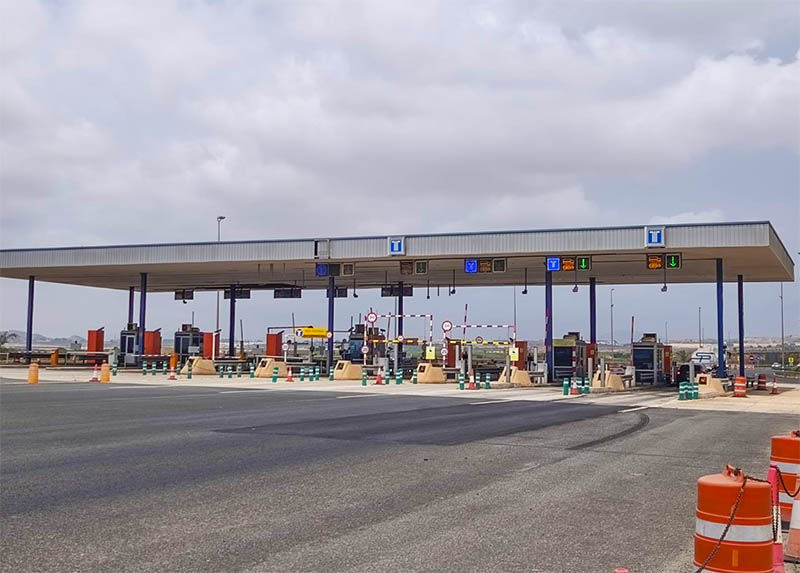
Almost every resident of Torrevieja who frequently travels to Orihuela Costa or the Region of Murcia has asked themselves the same question at some point. How is it possible to travel hundreds of kilometers on the AP-7 today without paying a single euro, and yet have to pay 5.10 euros in high season —or 2.85 euros the rest of the year —for a journey of just a few kilometers between La Zenia and Los Montesinos ?
To answer this question we have consulted the official documentation of the Ministry of Transport, the file of the public tender with which the highway was awarded and the data available on the concession.
The story is much more interesting than it seems.

Many drivers believe this stretch is simply the last vestige of the old AP-7 toll road. However, this is not the case. It is a separate concession, the AP-7 Alicante–Cartagena , created by the Spanish government in 1998 through a public-private partnership. The winning company assumed the construction costs and, in return, obtained the right to operate the highway and collect tolls for the period stipulated in the contract.

Currently, the price for a car is €5.10 during peak season, which includes June, July, August, and September, as well as the Easter period. During the off-season, the price drops to approximately €2.85 .
What's striking is that the toll isn't calculated based on the actual kilometers traveled , but rather on an open toll system. In other words, the driver pays to pass through a toll plaza, not for the exact distance covered. For this reason, a trip of about twenty kilometers between La Zenia and Torrevieja can cost practically the same as a much longer journey within the same concession area.
The highway experiences a significant volume of traffic. According to official data from the Ministry of Transport, the concession handles an average daily traffic volume of 24,909 vehicles , while approximately 8,595 toll transactions are recorded daily, amounting to more than 3.1 million paid crossings per year .
The Ministry only publishes revenue figures for specific fiscal years. Thus, during its first full year of operation, in 2001, the concession generated €3.7 million in toll revenue. Four years later, that figure had risen to €12.5 million , and by 2023 it had reached almost €17 million .
Even considering only the fiscal years for which official data has been published by the Ministry, accumulated revenue already exceeds €90 million . The total amount collected since the highway opened is not publicly available. Based on the evolution of official revenue, it can be estimated that the accumulated revenue over more than twenty-five years of operation amounts to hundreds of millions of euros , although the Ministry does not publish a historical balance sheet that would allow for determining the exact figure.
It's important to remember that this revenue does not represent the concessionaire's profit . It finances infrastructure maintenance, repairs, road surface upkeep, toll station operations, personnel costs, taxes, investment amortization, and financial expenses related to construction.
The story of this highway began in 1998, when the Ministry of Public Works launched a public tender for the construction and operation of the AP-7 Alicante–Cartagena . The contract was awarded to a consortium comprised of Ploder SA, Sánchez Lago SL, Sanjumar SL, ALSA Grupo SA, Iniciativas de Infraestructuras y Servicios SA, and Banco Cooperativo Español .
Following the award, the company Autopista del Sureste, Concesionaria Española de Autopistas SA (AUSUR) was established, responsible for the operation of the highway to this day.
Over the years, the shareholding structure has changed. Currently, the main shareholders include Pralesa Concesiones SL, Grupo Corporativo Fuertes SL —the business group that owns the well-known ElPozo brand—and Quasar Finance SLU.
The official tender documents also reveal the cost of building the highway. The project encompassed approximately 75 kilometers and a total budget of 30.03 billion pesetas , equivalent to about 180.5 million euros at the official exchange rate. This represents an approximate cost of 2.4 million euros per kilometer , a figure entirely in line with this type of infrastructure in the late 1990s.
Then an inevitable question arises: if most of the AP-7 is free today, why does this section continue to be a toll road?
The answer lies in the very nature of the concession. Over the past few years, the government has been progressively eliminating tolls on numerous sections of the AP-7 motorway as contracts with the concessionary companies expired. In most cases, the government chose not to renew these concessions, and the motorways became toll-free.
However, the Alicante-Cartagena concession has a separate contract signed in 1998, which is valid until August 2, 2048. As long as that contract remains in force, the concessionaire retains the right to collect tolls, unless the State decides to terminate the concession early, assuming the corresponding financial compensation.
In these twenty-five years, governments have changed, the management model for Spanish highways has evolved, and hundreds of kilometers of the AP-7 have become toll-free. But for the thousands of residents of Torrevieja, Orihuela Costa, and the south of the province of Alicante, the situation has barely changed: they still pay a toll every time they use this short stretch to save time on their journeys.
And this is where a final reflection arises.
If the government has already eliminated tolls on most of the AP-7 motorway, why does this section remain an exception? Will residents of southern Alicante have to wait until 2048 to travel free of charge on a motorway that forms part of the same major Mediterranean corridor that is already toll-free in most of Spain?