


The province strengthens its reliance on desalinated water: volumes, investment and new technologies
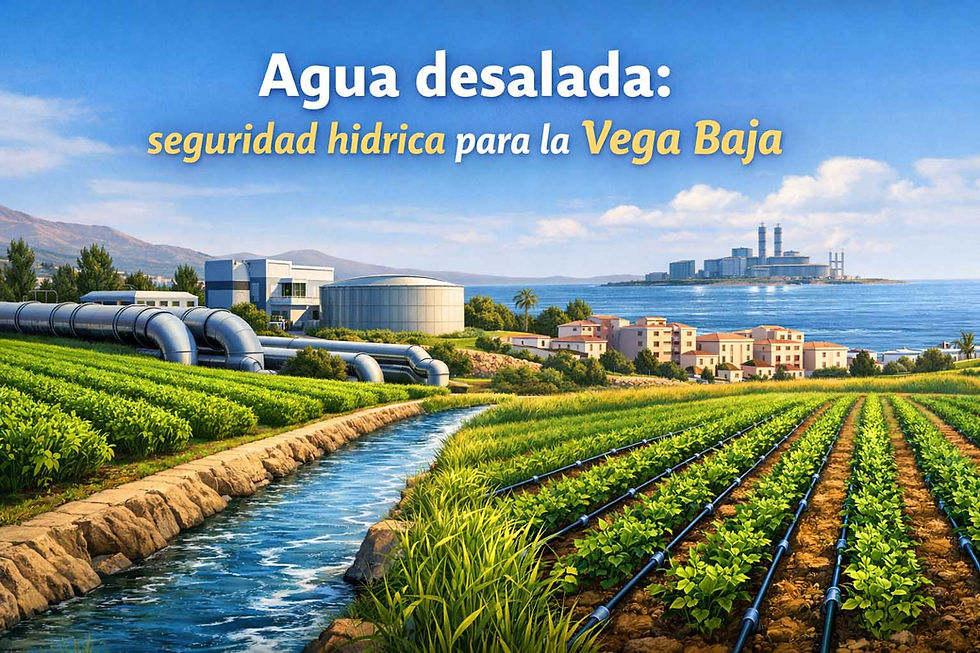
In 2026, the province of Alicante and the Vega Baja del Segura region are significantly increasing the share of desalinated seawater in their water supply system. The shift is driven by redistribution through transfer hubs and higher output from Mediterranean desalination plants.
According to hydrological estimates, between 180 and 200 million cubic metres of desalinated water will be supplied during the year, representing a 30–40% increase compared to recent averages. A central role is played by the Torrevieja desalination plant, one of the largest in Europe, with a capacity of up to 120 million cubic metres per year following its modernisation.
Authorities acknowledge that in certain months as much as 60–70% of the water used for urban supply and irrigation in Vega Baja will be desalinated. This shift is linked to reduced flows from the Tajo–Segura water transfer, ongoing drought conditions and the effects of climate change.
To adapt infrastructure to these new volumes, a more than €350 million investment package has been approved through 2027. The funds are allocated to expanding desalination capacity, building pumping stations, new pipelines, storage reservoirs and improving the system’s energy efficiency. The projects involve the state-owned company ACUAMED and are supported by European funding.
Regional authorities stress that the increased use of desalinated water is a necessary and strategic decision, as traditional models based on rainfall and inter-basin transfers no longer guarantee water security during periods of extreme drought.
Farmers’ associations in Vega Baja recognise that without desalinated water, agriculture in the region would face a critical situation. However, they warn about the high cost of the resource, which can reach €0.55–0.70 per cubic metre, significantly higher than conventional sources. The sector is therefore calling for continued subsidies and compensation mechanisms to ensure economic viability.
At the same time, Spain is deploying next-generation desalination technologies, including reverse osmosis systems with energy recovery — capable of reducing electricity consumption by up to 30% — advanced long-life membranes and pilot projects integrating solar power. These solutions are already being applied in water-scarce regions such as Alicante, Murcia and Almería.
Hydrological agencies report that persistent freshwater shortages are already affecting metropolitan areas including Barcelona and parts of Catalonia, Valencia, Málaga and south-eastern Spain. In many of these locations, desalination has moved beyond an emergency measure and has become a core element of the water balance.
Experts agree that reliance on desalinated water in coastal regions will continue to grow. Long-term sustainability will depend on combining technological innovation, network modernisation, leakage reduction and balanced water pricing policies. For Vega Baja, 2026 represents a turning point: desalination definitively becomes the foundation of regional water security.


Comments